
Wheel Chocks for 4 Post Lift Guide for Safer Workshop Operations

Vehicle lifts are essential tools in automotive workshops, garages, service centres, and industrial maintenance facilities. However, even high-quality lifting systems can become dangerous if vehicles are not properly secured during servicing. Many workshop owners searching for wheel chocks for 4 post lift are looking for safer ways to stabilise vehicles during inspections, repairs, storage, and maintenance work.
A 4 post lift supports vehicles using drive-on platforms, making wheel restraint systems especially important. Without proper wheel chocks, vehicles may roll unexpectedly during lifting, lowering, alignment work, or maintenance procedures. Wheel chocks help improve workshop safety, reduce accident risks, and create more stable lifting conditions.
Wheel chocks for 4 post lift systems help prevent vehicle movement during lifting, repairs, inspections, and storage. These wheel restraint devices improve workshop safety, vehicle stability, and operational control in automotive service environments.
What Are Wheel Chocks for 4 Post Lifts?
Wheel chocks are restraint devices placed against tyres to prevent vehicle movement while using a 4 post lift.
They are commonly used in:
- Automotive workshops
- Vehicle service centres
- Home garages
- Fleet maintenance facilities
- Performance tuning shops
- Industrial workshops
Wheel chocks provide additional safety alongside lift locking systems.
Why Wheel Chocks Are Important for 4 Post Lifts
Prevent Vehicle Roll Movement
Vehicles can shift unexpectedly during:
- Lifting
- Lowering
- Wheel alignment
- Brake servicing
- Suspension repairs
Improve Workshop Safety
Wheel restraint reduces accident risks around elevated vehicles.
Protect Technicians & Equipment
Unexpected movement can damage:
- Vehicle lifts
- Workshop tools
- Vehicles
- Garage flooring
- Alignment systems
Support Safer Maintenance
Stable vehicle positioning improves repair precision.
Reduce Operational Risks
Wheel chocks help create safer workshop procedures.
Common Uses for Wheel Chocks on 4 Post Lifts
Vehicle Storage
Stored vehicles require stable positioning on elevated platforms.
Brake & Suspension Repairs
Wheel restraint improves vehicle stability during servicing.
Wheel Alignment
Alignment work requires accurate and secure vehicle positioning.
Detailing & Inspection
Vehicle movement can affect detailing and inspection accuracy.
Performance Tuning
Stable vehicle placement supports safer tuning procedures.
Common Types of Wheel Chocks for 4 Post Lifts
Rubber Wheel Chocks
Rubber wheel chocks provide strong grip and floor protection.
Best For:
- Workshops
- Garages
- Vehicle storage
Benefits:
- Slip-resistant
- Durable construction
- Non-marking surfaces
Polyurethane Wheel Chocks
Industrial-grade wheel restraints for long-term workshop use.
Best For:
- Commercial garages
- Fleet maintenance facilities
Benefits:
- Chemical resistance
- Lightweight durability
- Long lifespan
Heavy-Duty Wheel Chocks
Designed for trucks, SUVs, and commercial vehicles.
Best For:
- Utility vehicles
- Fleet workshops
- Industrial garages
Benefits:
- High load capacity
- Better durability
- Improved restraint performance
Low-Profile Wheel Chocks
Compact wheel restraints designed for sports cars and lowered vehicles.
Best For:
- Performance vehicles
- Low-clearance cars
Benefits:
- Easier positioning
- Better compatibility
- Reduced interference
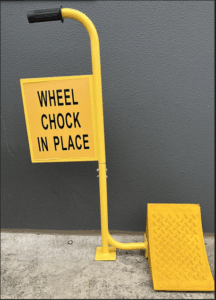
Mobile Wheel Chocks With Handle and Sign
Industrial maintenance facilities often require highly visible wheel restraint systems for larger vehicles and transport operations. Mobile wheel chocks with handles and warning signs improve operational safety and workshop efficiency.
Explore heavy-duty wheel restraint solutions here:
Mobile Wheel Chock With Handle and Sign
Key Features
- Heavy-duty industrial construction
- High visibility warning sign
- Extended handle system
- Suitable for heavy vehicles
- Improved workplace safety
How to Choose the Right Wheel Chocks for 4 Post Lift
Vehicle Weight Capacity
Choose wheel chocks suitable for vehicle load requirements.
Tyre Size Compatibility
Wheel restraint systems should match tyre dimensions.
Workshop Environment
Different surfaces require different grip capabilities.
Suitable environments include:
- Concrete workshop floors
- Epoxy-coated surfaces
- Industrial garages
- Service centres
Vehicle Type
Different vehicles require different wheel restraint systems.
Examples include:
- Passenger vehicles
- SUVs
- Trucks
- Sports cars
- Fleet vehicles
Frequency of Use
Commercial workshops require higher durability wheel chocks.
Best Practices for Using Wheel Chocks on 4 Post Lifts
Position Correctly
Place wheel chocks tightly against tyres before lifting.
Use Lift Locking Systems
Wheel chocks should support mechanical lift safety locks.
Inspect Regularly
Replace damaged or worn wheel restraints immediately.
Use Stable Lift Surfaces
Ensure lifts are level and properly maintained.
Follow Workshop Safety Procedures
Technicians should follow proper lifting protocols.
Common Safety Mistakes to Avoid
Relying Only on Lift Locks
Additional wheel restraint improves safety.
Using Undersized Wheel Chocks
Small wheel chocks may fail under heavier vehicles.
Ignoring Surface Conditions
Oil or debris can reduce grip performance.
Poor Wheel Chock Placement
Incorrect positioning reduces restraint effectiveness.
Using Damaged Equipment
Cracked or worn wheel chocks create safety risks.
Signs You Need Better Wheel Chocks
You may need upgraded wheel restraint systems if:
- Vehicles shift during lifting
- Existing wheel chocks slide easily
- Workshop operations involve heavier vehicles
- Current wheel chocks show wear or cracking
- Vehicle stability becomes inconsistent
Why Professional-Grade Wheel Chocks Matter
High-quality wheel chocks provide:
- Better vehicle stability
- Improved workshop safety
- Reduced accident risks
- Stronger restraint performance
- Long-term durability
Explore industrial transport safety solutions here:
Sands Industries & Trading Pty Ltd
FAQs
Why are wheel chocks important on a 4 post lift?
They help prevent vehicles from rolling during lifting and maintenance operations.
Can wheel chocks improve workshop safety?
Yes, they reduce movement risks and improve vehicle stability.
Are rubber wheel chocks suitable for garages?
Yes, rubber wheel chocks provide excellent grip and floor protection.
Do heavy vehicles require larger wheel chocks?
Yes, trucks and SUVs require higher-capacity wheel restraint systems.
Should wheel chocks replace lift safety locks?
No, wheel chocks should support existing lift safety systems.
Conclusion
Wheel chocks for 4 post lift systems are essential workshop safety tools that help stabilise vehicles during lifting, repairs, storage, and inspections. Proper wheel restraint reduces accident risks, improves operational safety, and creates more secure maintenance conditions for technicians and workshop operators.
Investing in durable wheel chocks helps improve vehicle stability, protect workshop equipment, and support safer automotive service operations across garages, service centres, and industrial maintenance facilities.
Contact Information
Sands Industries & Trading Pty Ltd
Unit 27/191, McCredie Avenue, Smithfield, NSW 2175
Phone: +61 4415 9165 | +61 477 123 699
Sales: sales@sandsindustries.com.au
Contact Us:
Sands Industries Contact Page